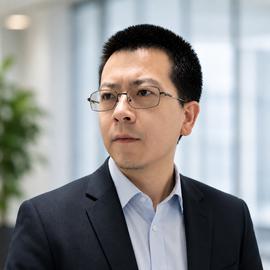
Dr. Hui Tang is a Research Assistant Professor in the Department of Neuroscience at the Medical University of South Carolina. He received his Ph.D. in Immunology from Peking University and completed postdoctoral training in Hematology/Oncology at the University of Illinois at Chicago and the University of Florida, followed by postdoctoral research in Tumor Immunology at Northwestern University.
His research program investigates how tumor-intrinsic and immune-cell mechanisms shape the tumor microenvironment and influence cancer progression and therapeutic response. His work integrates cancer biology, immunology, patient-derived tumor models, human induced pluripotent stem cell (iPSC)-derived immune cells, molecular and cellular assays, and transcriptomic approaches to define tumor-immune interactions and identify strategies to enhance antitumor immunity.
A major focus of his recent research has been defining the role of cysteinyl leukotriene receptor 1 (CysLTR1) in tumor-promoting myelopoiesis and neutrophil function. Using genetic and pharmacological approaches, mouse tumor models, flow cytometry, molecular assays, and single-cell and bulk RNA sequencing, his work established mechanisms linking CysLTR1 signaling to myeloid-cell development, neutrophil maturation, granule synthesis, and tumor progression.
His research also focuses on the interaction between glioma and the brain immune microenvironment. Building on expertise in human iPSC-derived microglia-like cells, his current work uses iPSC-derived microglia and patient-derived glioma models to investigate how tumor-intrinsic features influence microglial recognition and phagocytosis. These studies examine how glioma engulfment reshapes microglial inflammatory, immune-regulatory, and antigen-presentation programs.
Ultimately, his research aims to understand tumor-immune interactions and develop strategies to enhance antitumor immunity, including approaches to engineer immune cells with improved tumor-recognition and tumor-phagocytic functions for brain tumor therapy.
- Tumor Immunology
- Tumor-Immune Interactions
- Myeloid Cell Biology
- Microglia-Glioma Interactions
- Immunotherapy Resistance
- iPSC-Derived Immune Cells
- Cancer Immunotherapy
PhD in Immunology, 2016
Peking University
Bachelor of Medicine in Basic Medicine, 2011
Peking University